The Waste Converters Project (WCP) shall resolve the issues concerning the effective collection and efficient disposal of waste in the Nigerian State. The effective collection of waste from the Nigerian communities is a fundamental challenge, as the infrastructure to collect waste is not available. As the issue of waste separation is not addressed at source, a waste resorting and separation process must be put in place at Material Recovery Facilities (MRFs). An obvious fact is that all citizens generate waste everyday from the consumption of food and the use of materials. Therefore, environment(waste) surcharge are instituted to facilitate the efficient collection of waste through a direct surcharge process.
WCP shall deploy a cloud based, Artificial Intelligence (AI) enterprise solution which shall monitor and manage the transportation schedule of the compactor or hook-lift trucks and/or tricycle on a real-time basis. The system shall collect route intelligent data of the truck movements and the weight of waste delivered to the transfer station or IWMF. WCP shall situate its operations at a strategic office location where a control centre shall exist to monitor the movement of waste compactor trucks as the collection of waste are done within the metropolis.

 WCP Capital is a financial service provider which engages internet banking structures and value added service (VAS) protocol to administer a surcharge on telecommunication subscribers in the Nigerian market space. WCP’s operations is organized to manage the waste service fee collection and waste collection and transportation matrix.
WCP Capital engages the Waste2Green artificial intelligence and cloud based solution for the operations, optimization, monitoring and reporting along all process chains and phases.
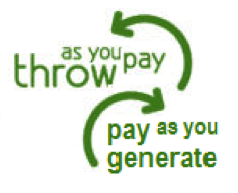
Throw As You Pay (TAYP)/Pay As You Generate (PAYG) SMART Model
WCP’s Throw as you pay (TAYP) - trash metering, user pricing, variable rate pricing, or user-pay - is a usage-pricing model for disposing of municipal solid waste. Residential users are charged a flat rate based on a state-wide service charge, while commercial and industrial users are charged based on the quantum of waste they present for collection to the municipality or local authority. Nevertheless, and in the instance, as presently exist, where waste generators are reluctant to pay the waste service charge on a designated monthly basis, the pay as you generate approach is engage. Pay as you generate (PAYG) is a daily enforcement of waste service charge to generators telecommunication subscription account via a Sustainability Management System (SMS)-based wallet service approach. The generators are charged a flat fee per day. The charges generated from the TAYP/PAYG model are block-chain wallet accounts which are agglomerated daily into bank accounts managed through our Internet Banking Service Provider (IBSP) application which is applied via telecommunication service providers’ platform from which the Waste Tariff Fund (WTF) is created.
The WTF engages a full-unit pricing as users pay for all the garbage they want collected in advance by paying the flat service fee which attracts the collection of a maximum number of waste bags or containers from designated collection centres. The need for additional waste bags or containers are available for purchase, should the user exceed the permitted amount. For such additional service, a surcharge to the wallet accounts at the collection of extra waste bags are provided for the additional waste collection. The variable-rate pricing is undertaken for commercial and industrial users who can choose to rent a container of varying sizes (some programs offer up to five), with the price corresponding to the amount of waste generated.
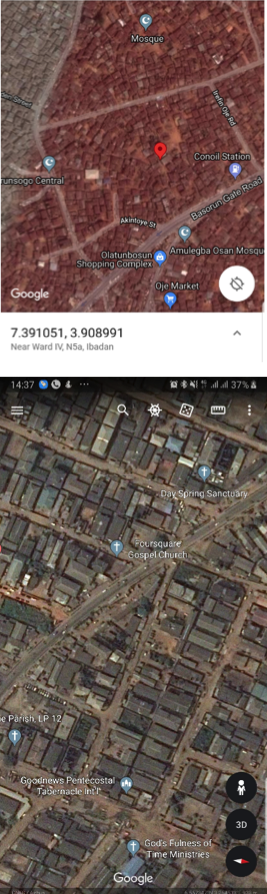
- WCP proposes a national waste management system which is predicated on zonal mapping of neighborhoods in the Local Government Areas.
- WCP creates an efficient waste collection arrangement from the neighborhoods, as neighborhoods have been mapped to understand the spatial layout of the communities in order to effect a practical waste collection arrangement.
- WCP shall develop Akanran Waste Converters (AWC), Igando Waste Converters(IWC), Onibueja Waste Converters(OWC) and Ilokun Waste Converters(IWC) projects as a one-stop solution for the effective disposal of waste as organic (green) fertilizer plants and independent power producers are created to achieve the efficient disposal of waste with zero footprints in the South-West.
- For effective collection, waste skip bins shall be strategically provided within communities to aid collection.
- WCP shall situate offices at transfer stations located in a strategic LGA which will monitor the waste collectors and serve as a feedback for complaints from the waste generators.
- WCP offices shall be developed into transfer stations especially for localities that have challenges with infrastructure access. At such wards in the LGAs, WCP shall encourage the use of waste tricycles to effectively collect waste in such infrastructure challenged locations.
- At such locations, the transfer stations shall be designed to manage the logistics and movements of the waste tricycles while waste containers shall be used to pile the waste for easy collection by compactor trucks to the IWMF.
- WCP shall deploy a cloud based, Artificial Intelligence (AI) enterprise solution which shall monitor and manage the transportation schedule of the compactor or hook-lift trucks and/or tricycle on a real-time basis. The system shall collect route intelligent data of the truck movements and the weight of waste delivered to the transfer station or IWMF.
- WCP shall situate its operations at the IWMF or a strategic office location where a control centre shall exist to monitor the movement of waste compactor trucks as the collection of waste are done within the metropolis.
Waste Transfer Station
At each LGA, we have delineated zones along the wards structure and plan for a dynamic transfer station arrangement for the inner-city areas which allows for the consolidation of waste collection. From the transfer stations, we manage waste transportation to the recovery facility. For the inner city households, waste tricycles collect garbage from door-to-door. The waste collected are quickly delivered to stationary compactors at the transfer stations where hook lift trucks move the baled waste to the recovery facility. WCP follows the rule that “No waste is left at the transfer stations for 24hours”. At the outer-city zones, waste compactors undertake door-to-door collection of wastes and move the compacted waste to the recovery facility when the trucks are full.
The door-to-door collection of waste at inner-city zones shall be undertaken during the day from 8:00 to 17:00 while the transportation of waste to the recovery facility will be undertaken from 12:00 to 6;00. The waste collection in outer-city zones shall be undertaken door-to-door during the day from 8:00 to 17:00. No door-to-door waste collection shall be done after 17:00 hours.
Transfer Station Arrangement
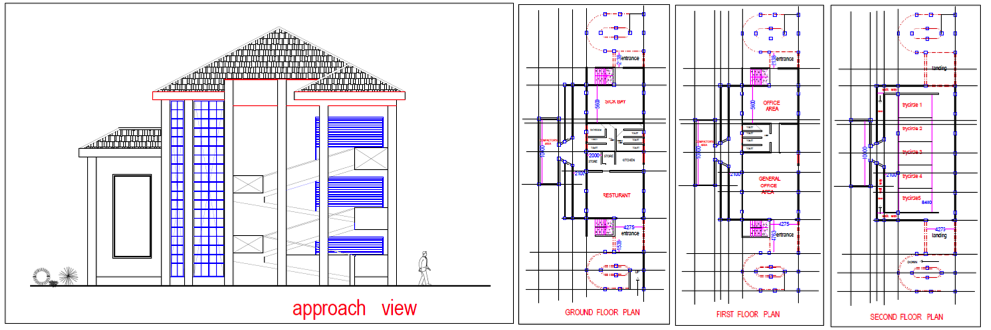
The waste transfer stations (WTS) are integral parts of our waste management architecture as garbage collected by the tricycles are consolidated at the WTS. The waste tricycles off-load the collected wastes at the second-floor levels where the garbage is pre-sorted and loaded into the compactor which consolidates the waste to be taken by hook-lift trucks to the conversion plants. The WTS is process designed to recover plastic bottles, paper and glass from the waste stream while serving as a collection centre for Pet plastics, HDPE containers and tyres which would be reused in a pyrolysis plant which would produce HFO to power a 200kva generating set for the station.
 AWC is a W2E company which is developing an Independent Power Plant (IPP) and W2C – a compost (organic fertilizer) plant at Ibadan, Oyo State. AWC will generate between 11.4 and 20MW green power and 140tpd of organic fertilizer from MSW. The AWC plant is a purpose-driven development to undertake the utilization of 2200tpd of MSW collected in the Ibadan Municipal Area of Oyo State.
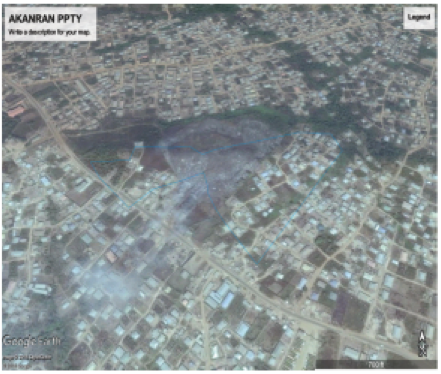
AWC plans to construct an integrated waste management facility(IWMF) at Akanran in Ona Ara LGA, Ibadan. The land on which AWC shall construct the IWMF covers about 9.5 hectares and is situated along Olorunsogo – Akanran road in Ona Ara LGA, Ibadan. The site abuts the road which transverse through four(4) LGA – Egbeda, Oluyole, Ona Ara and Ibadan South East. The road travels through farm settlements to the east and passes through the centre of Ibadan city to the west. The land use around the project site consists mainly of a mixed use of commercial and residential properties. The existing waste dump site and adjourning land are being converted to the location of the Akanran Integrated Waste Management Facility(Akanran-IWMF).
IWC is a W2E company which is developing an Independent Power Plant (IPP) and W2C – a compost (organic fertilizer) plant at Igando, Lagos State. IWC will generate 20MW green power and 140tpd of organic fertilizer from MSW. The IWC plant is a purpose-driven development to undertake the utilization of 2400tpd of MSW collected from the Lagos West District.
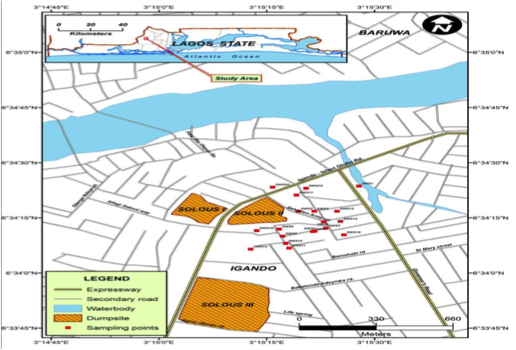
The land on which IWC shall construct an integrated waste management facility (IWMF) covers about 7.2 hectares and is situated on a controlled engineering landfill within longitude 3o26E to 3o25E and latitude 6o56N to 6o57N in Igando, Alimosho LGA, of Lagos State. The site is surrounded by residential areas, an abattoir and a small fast shrinking Oba stream which is located about 2.5km east of the dumpsite. The land use around the project site consists mainly of a mixed use of commercial and residential properties. The existing waste dump site and adjourning land are being converted to the location of the integrated waste management facility. The Igando – Isehri Olofin Road transverses through the site location and continues to the LASU – Iba Road. The Lagos State University(LASU) is 13.4km from the site.
OWC is a W2E company which is developing an Independent Power Plant (IPP) and W2C – a compost (organic fertilizer) plant at Osogbo – Iwo Road, Egbedore LGA, Osun State. OWC will generate 6MW green power and 140tpd of organic fertilizer from MSW. The OWC plant is a purpose-driven development to undertake the utilization of 1000tpd of MSW collected from the Osun Central District.
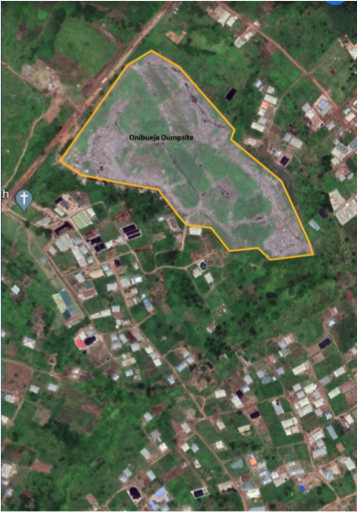
The land on which OWC shall construct an integrated waste management facility (IWMF) covers about 9.94 hectares at the Onibueja dumpsite. The Onibueja open dump waste disposal site lies at Longitude 7.793001 and Latitude 4.491083. The topographic evaluation around the dumpsite generally slopes gently from the north western part towards south eastern part. The land use around the project site consists mainly of residential, commercial properties and farms. The existing waste dump site and adjourning land are being converted to the location of the integrated waste management facility. The Onibueja waste dumpsite is situated on the Osogbo – Iwo Road which is a short distance of 2km from the Ring Road. The Osun State University (OSSU) is 16.7km from the site.
IlWC is a W2E company which is developing an Independent Power Plant (IPP) and W2C – a compost (organic fertilizer) plant at AdoEkiti – Iroko Road, Ekiti State. IlWC will generate 6MW green power and 140tpd of organic fertilizer from MSW. The IlWC plant is a purpose-driven development to undertake the utilization of 1000tpd of MSW collected from the Ekiti Central District.
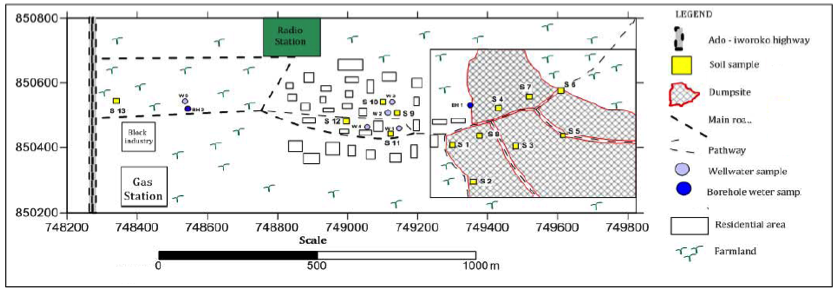
The land on which IlWC shall construct an integrated waste management facility (IWMF) covers about 24.7 hectares at the Ilokun dumpsite. The Ilokun open dump waste disposal site lies between latitudes 850200 to 850800 and Longitude 749300 and 749800. The topographic evaluation around the dumpsite ranges from 337.4m to 405.2m above mean sea level and generally slopes gently from the north western part towards south eastern part. The land use around the project site consists mainly of a mixed use of commercial, residential properties and farms. The existing waste dump site and adjourning land are being converted to the location of the integrated waste management facility. The Ado-Ekiti – Iworoko Road transverses the site location and continues through the Ekiti State University(EKSU) to Iworoko. The EKSU is 5.3km from the site.
Our strategy mandates a holistic development approach for which the establishment of an IWMF is critical. The IWMF features auto-sorting, and waste recycling modules which would have the capacity to process up-to 1500tons/day. The optimization achievable from sensor based auto-sorting facilities presents an advantage to efficiently sort municipal solid waste (MSW) for processing into organic fertilizer or power as the case is. To achieve our goals for the IWMF, we shall engage the Plazma MRF collection and auto- sorting technology for our MRF, Biomax Green rapid thermophilic digestor technology for our W2C, Beston waste pyrolysis technology for the W2E level 1 and Thermal Treatment Technology for our W2E level 2.
© Copyright 2020 All Rights Reserved