Material Recovery Facility (MRF)
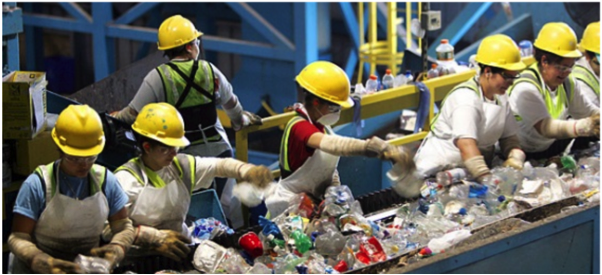
The MRF at WCP shall process recyclable materials for use in its compost and power plants. The MRF takes in a broad stream of solid waste and separates out recyclable materials through manual and mechanical sorting. The recyclables are processed mainly for its use as plastics and tyres are utilized by its pyrolysis plant to produce heavy fuel oil for use in its intermediate generating plant which powers the compost plant, while the syn-gas produced is reused in the pyrolysis.
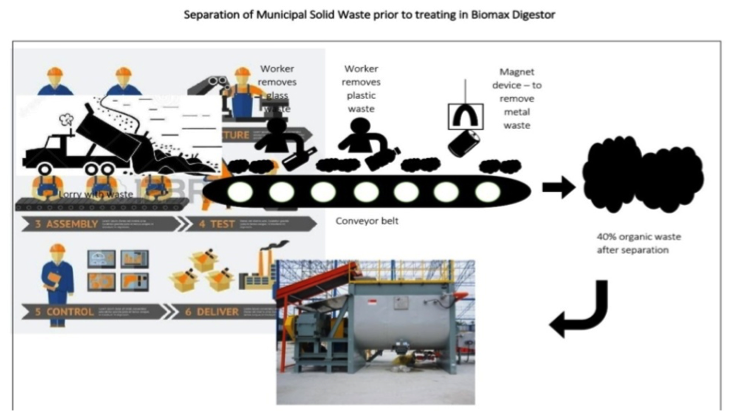
The MRF is semi-automated and uses ultraviolet optical scanners and magnet to simultaneously sort paper, cardboard, aluminum, plastics, glass and metals while workers augment the sorting of items by hand.
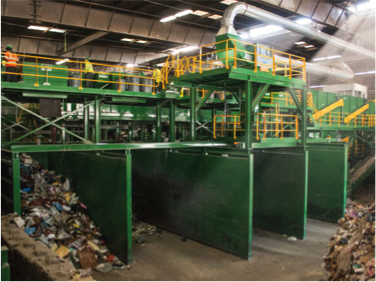
Plazma Collection and Auto- Sorting Technology.
Our strategy mandates a holistic development approach for which the establishment of an integrated waste management facility (IWMF) is critical. The IWMF features auto-sorting, and waste recycling modules which would have the capacity to process up-to 1500tons/day. The optimization achievable from sensor based auto-sorting facilities presents an advantage to efficiently sort municipal solid waste (MSW) for processing into organic fertilizer or power as the case is.
Waste to Compost (W2C)
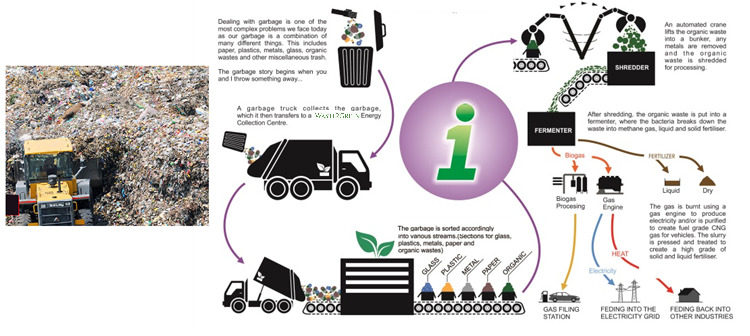
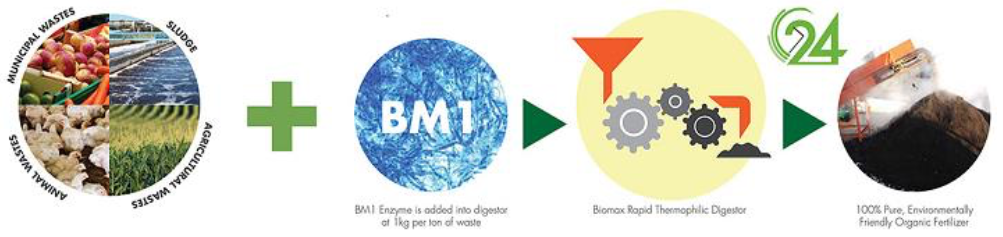
The waste to compost plant is a mechanical biological treatment facility which uses an in-vessel rapid thermophilic digestor technology. The Biomax breakthrough technology converts organic waste into 100% premium grade organic fertilizer at high temperature within 24hours. The technology employed by Biomax is the fastest process so far in organic waste treatment industry. Biomax is highly committed in its research and development which innovates various enzyme-based solution to support sustainable business operations.
Biomax Rapid Thermophilic Digestor Technology(RTDT)
Our organic fertilizer partner, Biomax Technologies (now Biomax Green) is a Singapore-based green technology company that specializes in solutions for agricultural and environmental industries. A firm believer and an advocate in environmental sustainability, Biomax stand tall among Asian rivals as a hallmark of environmental excellence and a role model for sustainable development.
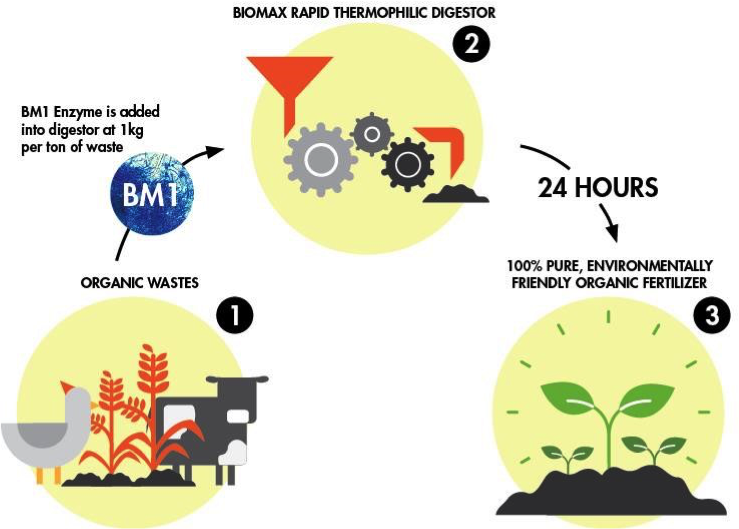
The most notable of Biomax technologies is the patented Rapid Thermophilic Digestion Technology (RTDT). The technology allows its users to convert organic wastes into a pathogen-free and odorless premium-grade bioactive organic fertilizer in twenty-four (24) hours. The Biomax RTDT is designed to provide a sustainable solution to the challenges witnessed in the industry. It is a revolutionary technology in organic waste management and engages the BM1 enzymes and Rapid Thermophilic digester to produce commercially marketable end products. The state-of-the-arts rapid thermophilic digestor provides an optimum working environment for the enzymes as they are an enclosed and controlled system.
The Biomax RTDT is simple and easy to operate, requiring minimal manpower and maintenance. The Biomax thermophilic digestor technology converts any organic waste into high quality organic fertilizer within 24 hours. The proprietary Biomax RTDT combines a specially designed Rapid Thermophilic Digestor and patented BM1 enzymes to break down organic waste into fertilizer rich in nutrients, and high in organic matter. The Biomax RTDT is an automated enclosed system that treats organic wastes at high temperatures, reducing air pollution and killing harmful pathogen. It also provides an optimum environment for its patented enzymes, so as to accelerate the aerobic fermentation process.
BM1 ENZYMES was specially formulated after years of research, these patented enzymes are made of thermophilic bacteria that operate best at 80degC, and can complete the digestion process in just 24 hours.
ADVANTAGES OF BIOMAX
- Treat and convert organic waste to organic fertilizer in 24hours.
- Can mix and treat any organic waste including tissue paper and card boards.
- Batch production to ensure consistency of output.
- Product rich in nutrients essential for plant growth
COMPETITOR TECHNOLOGY
- Biogas (high capital input and need to treat the by-product i. e. sludge).
- Vemi-composting (takes at least 60days to treat)
- Windrow (takes at least 2-3 months to treat)
- Pile composting (takes at least 2-3 months to treat)
- Dewater, heat and dry treatment (takes 6 hours but bad smells remain and cannot apply immediately for growing crops and plants)
- Land-filling (will run out of space and need to let the gas build-up to escape to prevent combustion);
- Treating food wastes by burning (not energy efficient).
Waste to Energy (W2E)
Our IWMF is powered by waste derived heavy oil as we embark on a low carbon footprint at our conversion plants. WCP’s IWMF shall engage the Beston waste to energy plant which is based on the tyre pyrolysis technology. The tyre pyrolysis plant is an environmental protection system which uses the continuous liquefaction technology and catalytic breakdown reaction to convert waste plastics into renewable resources, such as fuel oil, carbon black, steel wire, combustible gas and so on. The end products can be applied to diesel engines and generators directly, or come into high ranking diesel and gasoline through Beston’s pyrolysis oil distillation plant.
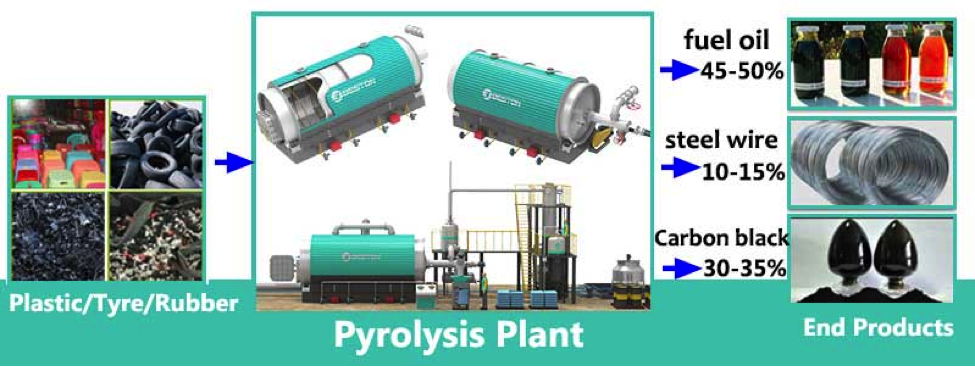
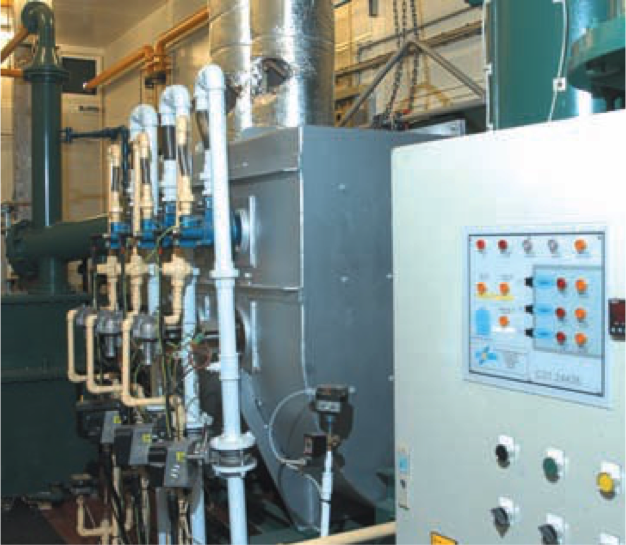
Beston Thermal Treatment Technology
The small-scale, commercially proven, energy from waste technology provides an environmentally beneficial solution to the problems of epileptic power supply. Our partners provide a local solution to produce low-cost electricity, while outperforming the EU Emissions Standard (2000/76/EC). The community sized facilities developed by our partners convert non-recyclable, residual waste into renewable energy displacing fossil fuels.
Our energy partner, Beston Group Ltd of China, with other global interest specializes in Incineration/Gasification technology which provides us with a comparative advantage to produce 20MW green power.
The thermal incineration technology engaged by our partner is proven beyond doubt: in 2009 seven operating plants built since 1997 had accumulated a combined total of 400,000 hours. The existing plants achieve outstanding environmental results, with minimal impact on the local community.
The plants provide the following:
- Diversion of residual waste from landfill
- Energy recovery as heat or electricity
- Ultra-low emissions
- A local solution to a local waste problem
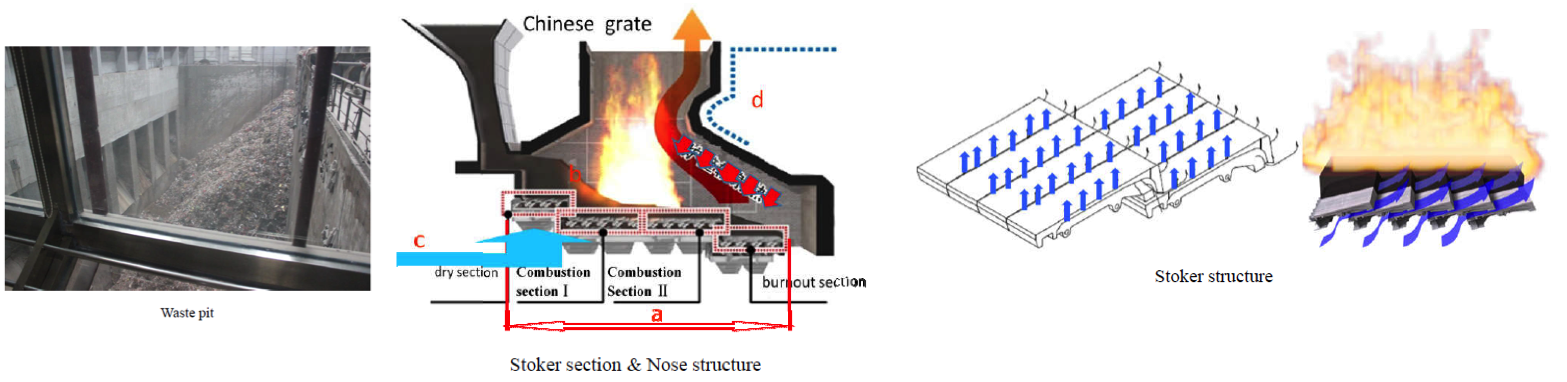
The municipal solid waste (MSW) transported to the plant is logged by the waste weigh bridge and then dumped into the waste pit which is designed to have a storage volume of 34,000m3 (for 7days treatment). The waste in the pit is mixed properly using the bucket of the waste crane to homogenize the waste.
The incinerator adopts a unique revolving type stoker technology, which has the characteristics to achieve high pressure combustion. It is independently-driven as harmless ash & exhaust gas are generated from its engagement.
Technology Providers
© Copyright 2020 All Rights Reserved